Are We Building Tomorrow’s BESS Decommissioning Challenge Today?
The battery storage industry is focused, quite rightly, on growth. Most discussions centre on development, optimisation, augmentation and extending asset life. Given that many projects are still years away from reaching end-of-life, decommissioning is often viewed as a challenge for the future.
The risk is that this creates a false sense of distance.
At Gore Street, we continue to assess how decommissioning, recycling and end-of-life considerations may evolve as the battery storage sector matures. Through that process, one thing has become clear: many of the assumptions the industry holds about end-of-life deserve closer scrutiny.
The challenge is not just what happens when assets reach the end of their lives. It is ensuring we ask the right questions long before we get there.
Reality #1: Decommissioning Is a Construction Project in Reverse
A common misconception is that decommissioning is relatively straightforward.
In practice, it resembles a construction project in reverse.
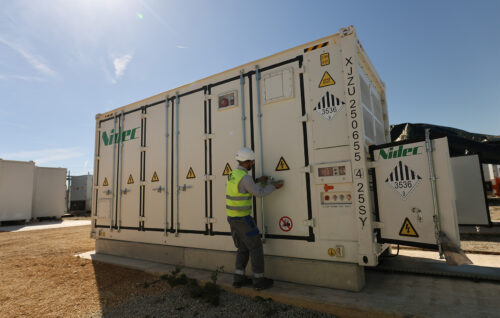
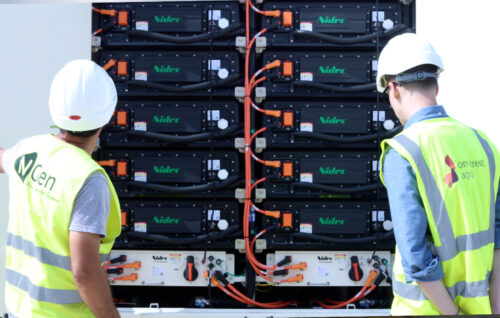
Assets must be safely dismantled, batteries removed and transported, specialist contractors coordinated, electrical infrastructure disconnected and regulatory requirements met. Recycling is only one component of a much larger and more complex process.
Unlike construction, however, there are relatively few established playbooks. Much of the industry is still learning what good looks like and practical experience remains limited.
As more projects approach end-of-life, building that experience will become increasingly important.
Reality #2: The Cost Picture Is Less Certain Than Many Assume
There has long been an assumption that maturing recycling markets will steadily reduce costs.
The reality may prove more nuanced.
Deployment of grid-scale battery storage has accelerated rapidly, and the first generation of assets is now beginning to approach key lifecycle decision points. While recycling markets continue to develop, recycling itself represents only part of the overall picture. Owners must also consider project management, specialist labour, transportation, logistics and compliance requirements. In an Electric Power Research Institute (EPRI) study, module recycling accounted for only around a third of total decommissioning costs.
As a result, decommissioning can be more complex than many early assumptions suggested. However, end-of-life outcomes are influenced by more than costs alone. Opportunities such as equipment reuse, repowering and the long-term value of grid connections can all play an important role in determining value at the end of a project’s life.
Reality #3: End-of-Life Isn’t Always About Battery Degradation
There is a common assumption that battery assets reach end-of-life when the batteries themselves stop performing. In reality, the picture is often more complicated.
Assets can become uneconomic or operationally constrained long before battery degradation is the determining factor. Control systems become obsolete, suppliers exit markets, spare parts become difficult to source, and support arrangements can disappear. In some cases, assets may still retain useful capacity but no longer make commercial sense to operate.
This is an important distinction. Decommissioning is not simply a technical challenge driven by battery health. It is an asset management challenge shaped by economics, technology and operational realities.
Reality #4: There May Be More Value Left Than We Think
The conversation around end-of-life should not focus solely on disposal.
Many battery assets still contain components with potential residual value. Equipment may be refurbished, repurposed or sold into secondary markets. Battery cells may have second-life applications. Transformers and other infrastructure may continue to serve useful purposes beyond the life of the original project.
The most effective decommissioning strategies are therefore likely to focus not just on minimising cost, but on preserving and creating value. While material recovery and equipment reuse are important considerations, infrastructure such as grid connections may continue to retain significant value long after the original asset has ceased operating.
Where the Industry Needs More Clarity
If the industry is to avoid building tomorrow’s decommissioning challenge today, greater clarity is needed in several areas.
First, operators and investors need a more realistic understanding of decommissioning costs and how they should be incorporated into long-term financial planning. As more assets approach end-of-life, assumptions made a decade ago will need to be tested against real-world experience.
Second, responsibilities across the asset lifecycle need to become clearer. Questions around ownership, recycling obligations and supplier responsibilities can often appear straightforward on paper, but the practical realities are more complex.
There is also a significant opportunity to think beyond recycling. Refurbishment, component resale and second-life applications all have the potential to reduce costs, create value and improve sustainability outcomes, but these pathways remain relatively immature.
Finally, the industry needs to better understand how decommissioning interacts with augmentation and repowering decisions. In many cases, extending asset life may prove more attractive than replacement, but doing so requires robust data, long-term planning and a clear understanding of the trade-offs involved.
Thinking Beyond the Build Phase
The battery storage industry has become increasingly sophisticated at developing, financing and operating assets. The next stage of maturity will require the same level of focus on what happens at the end of an asset’s life.
At Gore Street Capital, our decommissioning strategy is developing as we prepare for that next phase. Alongside this, we are actively exploring opportunities to extend asset life through augmentation, refurbishment and improved asset management practices before decommissioning becomes necessary.
While the industry may not yet have all the answers, it is becoming clear that the organisations asking these questions today will be better positioned to manage costs, maximise value and deliver more sustainable outcomes tomorrow.
As more operators begin navigating end-of-life decisions, there is a significant opportunity for the industry to share knowledge and experiences. We would welcome conversations with others working through similar challenges, as collectively developing best practice will benefit the sector as a whole.

Keep Up to Date
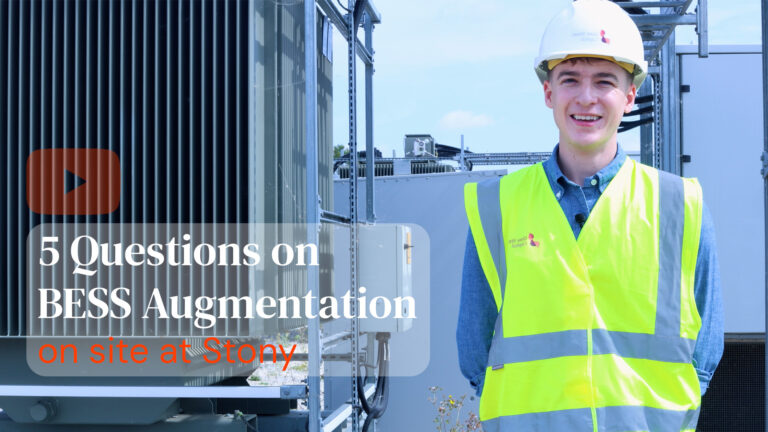
- Battery augmentation can play an important role in extending asset life and delaying end-of-life decisions. Join David Harris, Senior Asset Manager at Gore Street Capital, as he visits Stony, one of the first battery augmentation projects within the Gore Street Energy Storage Fund portfolio. Watch: What is battery augmentation and why does it matter?
- Decommissioning is not only an operational and financial challenge, but also an ESG consideration. To learn how environmental, social and governance factors influence the way we invest, build, operate and manage battery storage assets, watch: How Sustainability Shapes the Battery Storage Lifecycle
- Follow us on LinkedIn to stay up to date with our latest insights and industry perspectives.